On this page 9 sections
Spinning reel or baitcaster? It is one of the oldest debates in fishing, and both sides have a point. Each reel type is better at some jobs and worse at others. This guide, updated for 2026, explains how they differ, where each one shines, and which one to buy first.
Quick answer: if you are a beginner, or you fish mostly light lures, live bait or light line, get a spinning reel. It is easier to use and almost never tangles on the cast. Choose a baitcasting reel when you fish heavier lures and line, need precise casts into cover, or want more cranking power, which is typical for bass anglers throwing jigs, crankbaits, spinnerbaits and swimbaits. Many experienced anglers carry both.
We earn a commission if you buy through these links, at no extra cost to you. Pinfishing is a participant in the Amazon Services LLC Associates Program, an affiliate advertising program designed to provide a means for sites to earn advertising fees by linking to Amazon.com.
Spinning vs baitcasting at a glance
| Spinning reel | Baitcasting reel | |
|---|---|---|
| Spool | Fixed; line spirals off the end | Rotates on the cast |
| Position | Hangs under the rod | Sits on top of the rod |
| Learning curve | Easy | Moderate; takes practice |
| Backlash (bird's nest) | Very rare | Possible until you learn thumb control |
| Light lures and bait | Excellent | Harder (except special finesse reels) |
| Heavy lures and line | Workable | Excellent |
| Casting accuracy | Good | Very good, with thumb control |
| Line twist | Can be an issue | Minimal |
| Best for | Beginners, finesse, panfish, trout, walleye, surf | Bass in cover, big lures, pike, musky, trolling |
How a spinning reel works
A spinning reel has a fixed spool that faces forward, hanging below the rod. To cast, you open the bail, hold the line with your index finger, and let go as the rod comes forward. The line spirals off the front of the spool, pulled by the weight of the lure. Because the spool doesn't turn, there is nothing to overrun, so tangles on the cast are rare.
When you turn the handle, the bail closes and the rotor wraps line back onto the spool. That design makes spinning reels very forgiving, and it is why most people learn to fish with one.
Spinning reel pros
- Easy to learn; beginners can cast in minutes
- Casts light lures, small jigs and live bait well
- Works with thin line and light leaders
- Hardly ever backlashes, even in wind
- Easy to switch between left and right hand on most models
Spinning reel cons
- Line can twist, especially with spinners and poor line lay
- Less precise casts than a well-controlled baitcaster
- Less comfortable with very heavy lures and thick line
- Hanging under the rod makes it less ergonomic for heavy cranking
How a baitcasting reel works
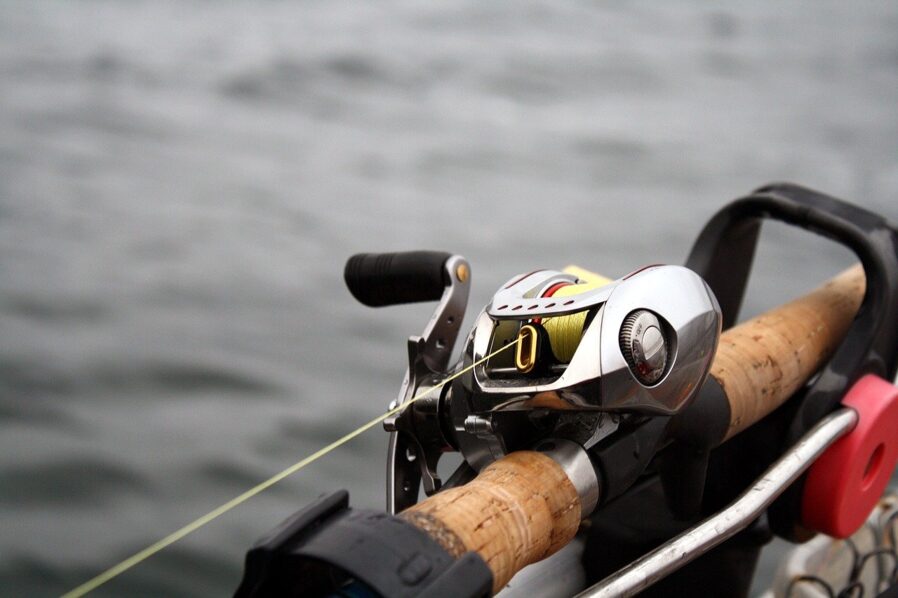
A baitcasting reel sits on top of the rod, and its spool turns as line goes out. You press a thumb bar to release the spool, cast, and control the spool with your thumb. A braking system (magnetic, centrifugal or digital) and a spool tension knob help slow the spool down so it doesn't spin faster than the line leaves.
If the spool overruns, you get a backlash, or "bird's nest": loops of line tangled on the spool. Modern brakes have made this much less common, but you still need practice and a light thumb, especially in the wind.
Baitcasting reel pros
- Precise, low casts into cover with thumb control
- Handles heavy lures and thick line or braid easily
- More cranking power for big crankbaits and swimbaits
- Little or no line twist
- Comfortable to hold for long days of casting
Baitcasting reel cons
- Takes practice; backlashes happen while learning
- Harder to cast light lures (under about 1/4 oz) with standard models
- Wind makes casting trickier
- Most models are right-hand or left-hand only
When to use a spinning reel
- You are new to fishing. A spinning outfit lets you focus on fishing rather than on untangling line.
- Light lures and finesse techniques: drop shots, ned rigs, small jigs, inline spinners and wacky worms.
- Live bait: minnows, worms and leeches under a float or on a light jig head, for walleye, perch, crappie and trout.
- Thin line and light leaders, for example in clear water.
- Long casts from shore or the surf with lighter rigs.
When to use a baitcasting reel
- Heavy lures: jigs, spinnerbaits, chatterbaits, deep crankbaits, swimbaits and big topwaters.
- Fishing in cover such as grass, wood and docks, where precise casts and heavy line help you land fish. This is why so many largemouth bass anglers rely on baitcasters.
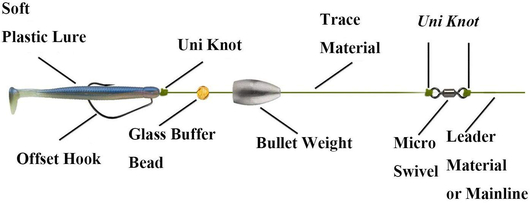
- Heavy line: 15 to 65 lb braid or thick fluorocarbon, including Texas and Carolina rigs (see our Carolina rig vs Texas rig guide).
- Big predators like pike and musky, and trolling.
How to choose
1. Your experience
If this is your first reel, start with spinning. Once you are comfortable, a baitcaster is a great second reel, and learning it is easier when you already know how to fish.
2. Lure weight
This is the most practical way to decide. For lures and rigs lighter than about 1/4 oz, spinning is usually easier. From about 3/8 oz and up, a baitcaster handles them well. In between, both work.
3. Line
Light line (4 to 10 lb) belongs on a spinning reel. Heavy fluorocarbon and braid are better on a baitcaster, which also doesn't twist the line.
4. Where you fish
Open water and long casts favor spinning. Tight cover and pinpoint casts favor a baitcaster.
5. The rod
Spinning reels need spinning rods (large guides underneath); baitcasters need casting rods (small guides on top, often with a trigger grip). You can't swap one for the other. Buy the reel and rod as a matched pair.
Reels we recommend
These two current reels are good benchmarks for each type. The picks are based on manufacturer specifications and angler feedback, not our own lab tests.
Shimano Stradic FM
- Spinning reel, sizes 1000 to 5000
Smooth, light spinning reel for fresh and salt water. HAGANE gear, Duracross drag, X-Protect.
The Stradic FM is the current version of Shimano's popular mid-priced spinning reel. It uses cold-forged HAGANE gearing, a Duracross drag, X-Protect water resistance and an Anti-Twist Fin on the line roller to help reduce line twist. A 2500 size suits finesse bass, walleye and trout; a 3000 or 4000 is a good all-rounder.
Shimano Curado MGL
- Low-profile baitcasting reel
MagnumLite spool, HAGANE body, Cross Carbon drag, 6+1 bearings.
The Curado has been one of the most popular bass baitcasters for decades. The MGL version uses Shimano's MagnumLite spool, which lowers start-up inertia so it casts lighter lures more easily and helps reduce backlashes. It has a rigid aluminum HAGANE body, Cross Carbon drag and a low-profile shape that fits well in the palm. It replaces the Curado K model we recommended before.
Tips for learning a baitcaster
- Set the spool tension: hold the rod up, press the thumb bar and adjust the tension knob until the lure falls slowly and the spool stops when the lure hits the ground.
- Start with more brake: turn the brakes up high while you learn, then reduce them as your thumb gets better.
- Use a heavier lure at first, around 1/2 oz, and practice in the yard.
- Keep a light thumb on the spool during the cast, and stop it as the lure lands.
- Avoid casting into strong wind until you are confident; side-arm casts help.
- Spool with braid or mono first; stiff fluorocarbon is less forgiving.
For a broader overview, including spincast, fly, conventional and centerpin reels, read our guide to the different types of fishing reels.
FAQ
Is a baitcaster better than a spinning reel?
Not in general. A baitcaster is better for heavy lures, heavy line and accurate casting into cover. A spinning reel is better for light lures, live bait and beginners.
Can a spinning reel handle big fish?
Yes. Large saltwater spinning reels land tuna, sharks and other big fish every day. The limit is more about the lure and line size you want to use than about the fish. Match the reel size to the line and fish you target.
Why do pro bass anglers use baitcasters?
Most bass tournament techniques use heavier lures and line in cover, where baitcasters give better accuracy, control and power. Pros still keep spinning rods on deck for finesse presentations.
Are baitcasters hard to learn?
They take some practice, but modern brakes make them much easier than they used to be. With proper spool tension and brake settings, most anglers get comfortable within a few outings.
Which hand should the handle be on?
Most spinning reels let you switch sides. Baitcasters come in right-hand or left-hand retrieve versions; choose the one that lets you cast with your strong hand without switching the rod.
Related fishing reports
Largemouth Bass fishingWalleye fishing